
Nothing adds up
The tradwife fantasy is a confused response to a world that no longer centres on time, care, or family.


It’s easy to laugh at #tradwives. And yet, beneath the flimsiness of this lifestyle idea and all the gender rage-bait is a painful truth shared by many: nothing adds up any more.
Forty years ago, one income could support a family. Today, two full-time jobs often can’t. Real wages have stagnated while housing, childcare and energy costs have soared.[¹] Parents are working harder than ever and still coming up short, too poor and time-stretched to raise their children in ways that foster belonging and security.
‘Tradwife’ is no kind of solution. But it does surface a problem that modern economics refuses to face: The social contract of the industrial age is fraying.
Families today are running on impossible maths. As parents are stretched thin and finances stretched thinner, it’s natural to look backward and make comparisons. In this light, for all its obvious shortcomings, the tradwife fantasy does at least paint a superficial picture of order, rhythm and clarity.
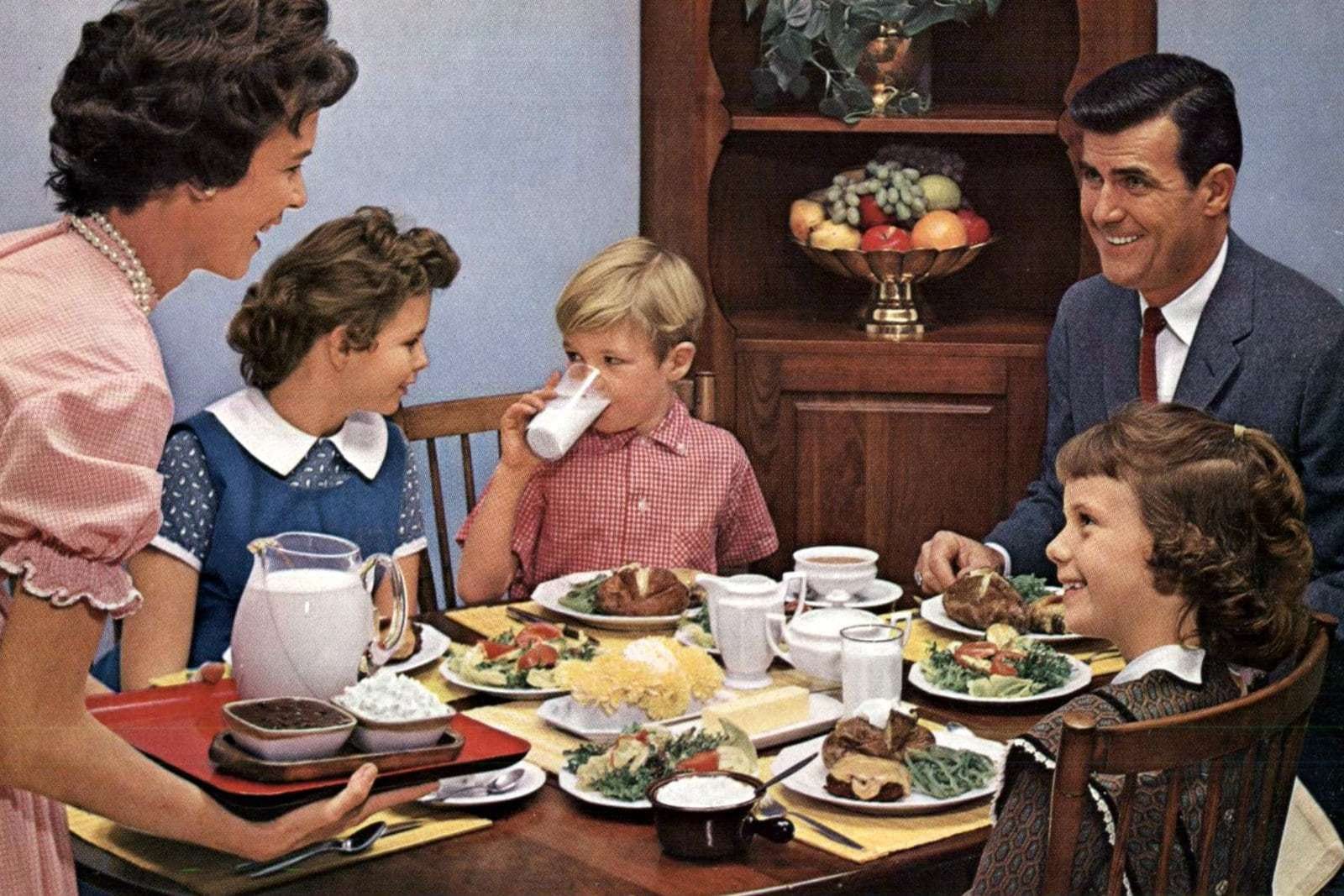
There’s nothing wrong with wanting safety and coherence within a family unit. But to look to the 1950s is to search in the wrong place. What people are reaching for in that decade was never really there, at least not in the way we now imagine it.
The trad impulse, stripped of all the cosplay, is really a cry of fatigue. A recognition that modern life is pushing families to breaking point. A longing to reclaim social rhythms that were eroding long before the post-war years, worn away by the slow mechanising of life. A deeper intuition of female domains that once anchored family and community life. A sphere of authority and presence that gradually thinned as daily living was pulled away from the home and into factories, offices and the tyranny of the clock. Over generations, we forgot not just who we are, but what family life was organised around.
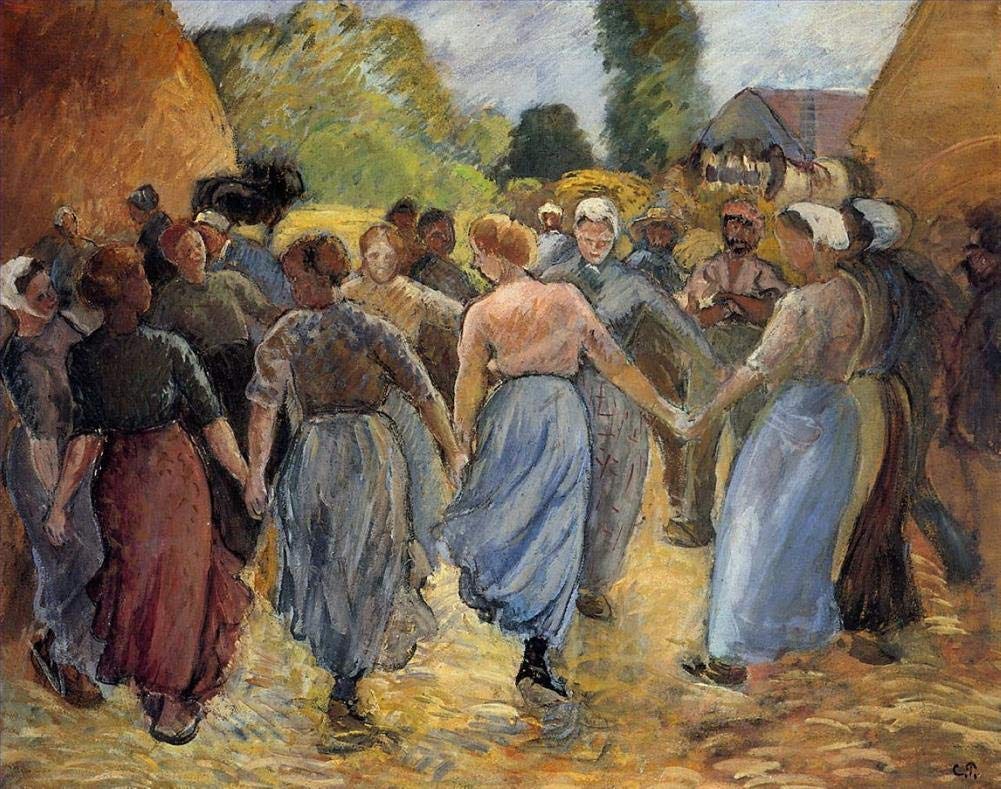
This could easily be misread as “women knowing their place.” That isn’t my argument. I’m asking something different: whether the foundations of women’s authority and the physical and social spaces that sustained it were quietly eroded as an unintended consequence of industrial progress.
Modernity has discarded many traditions, often for good reason. Some calcify and need reshaping. But the fact that something becomes tradition means it endured, working well enough to carry human life forward.
You don’t have to subscribe to tradwifery to feel the pull of the word “trad.” It gestures toward continuity, rootedness, coherence.
Yes, we live in greater material comfort than our ancestors. But comfort and belonging are not the same thing. For all our modern conveniences, something slower and more relational was thinned out. For all the many constraints and limitations of female life in the pre-industrial age, women did have physical spaces and communal networks that afforded them spheres of authority and local influence. As the modern age took new form, these platforms were swept away.
Before clocks and rigid timetables governed every hour, life moved to different rhythms; daylight, seasons, proximity, kin. Families and communities formed the organising centre, with wives and mothers at their heart.
The 1950s tradwife aesthetic is a myth because what it gestures toward was already gone. Those familiar images of smiling housewives, the steady breadwinner, tidy suburban order, gingham aprons, “lashings of ginger beer” weren’t really a golden age; they were a splint over psychic fracture. A plaster cast set around half a century of mass trauma.
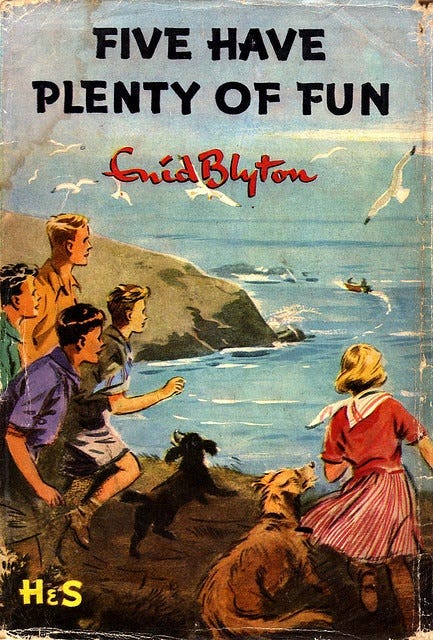
To be clear, the first half of the twentieth century was the bloodiest period in human history.[²] By 1945, almost every family had been touched by loss, fear or displacement, not once, but twice, through two world wars. An intergenerational reckoning that few escaped.
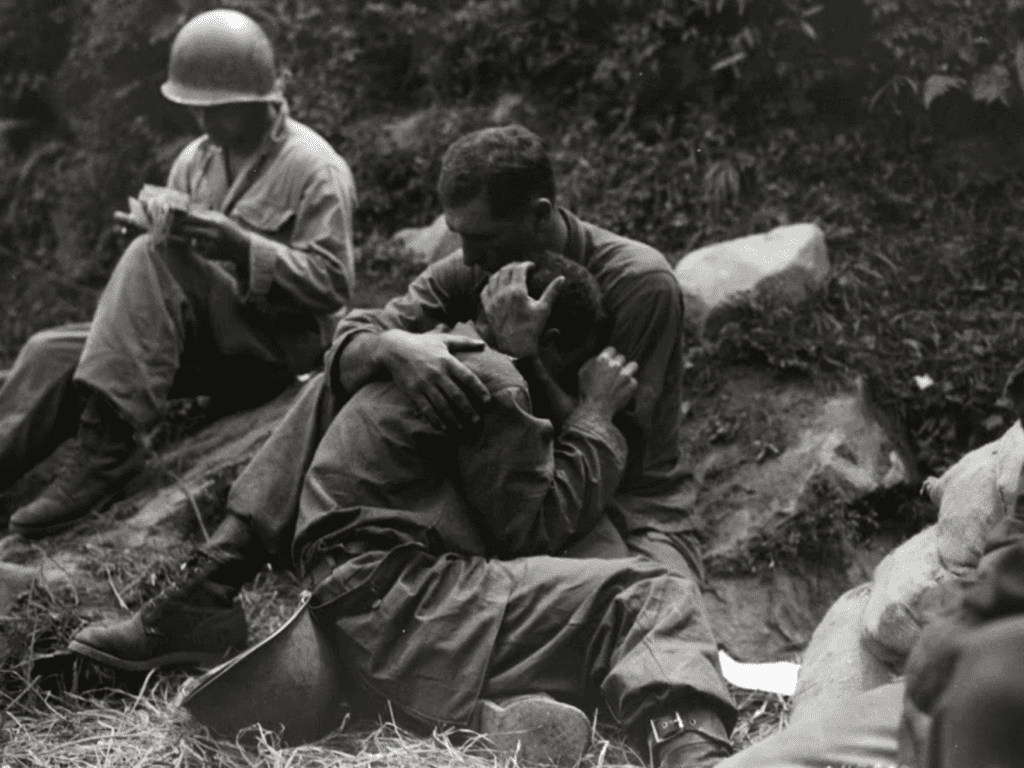
From 1914 to 1945, vast numbers of men were forced into combat. Today we understand what sustained violence does to the psyche. But then, there was no language for trauma.[³] Millions had seen and endured horrors that would echo through their lives, and through their families, for decades.
Post-war societies longed for normalcy at almost any cost. When catastrophe ends, people want to outrun it. So Western nations, emerging from war and depression, reached for order: rigid gender roles, suburban neatness, the factory floor, the home and hearth. Anything to forget.
The forced brightness of 1950s culture did create stability. But it was brittle, threaded with repression, alcoholism, domestic violence and grief with no outlet. What looked settled was anything but.
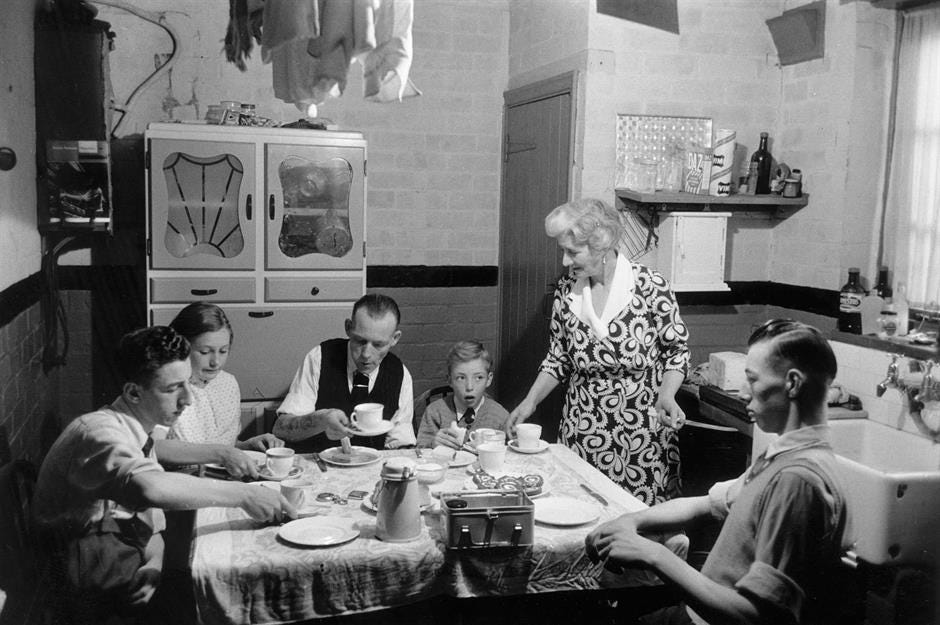
The 1950s were not a sane baseline for the “traditional family.” They were a form of survival, a carefully arranged idea of normality constructed by people trying to regain stability after decades of chaos.
And yet survival structures are rarely supple. The revolutions of the 1960s were, a conscious thawing of suppression, of pushing back against a culture that had braced itself for too long.
Before the 1950s freeze, women’s public presence had been moving differently. Throughout the 1920s, 30s and 40s, female power was surfacing as both strong and distinctly feminine. Women were expanding the field of participation, building on the sacrifices of suffrage and stepping more fully into public life.

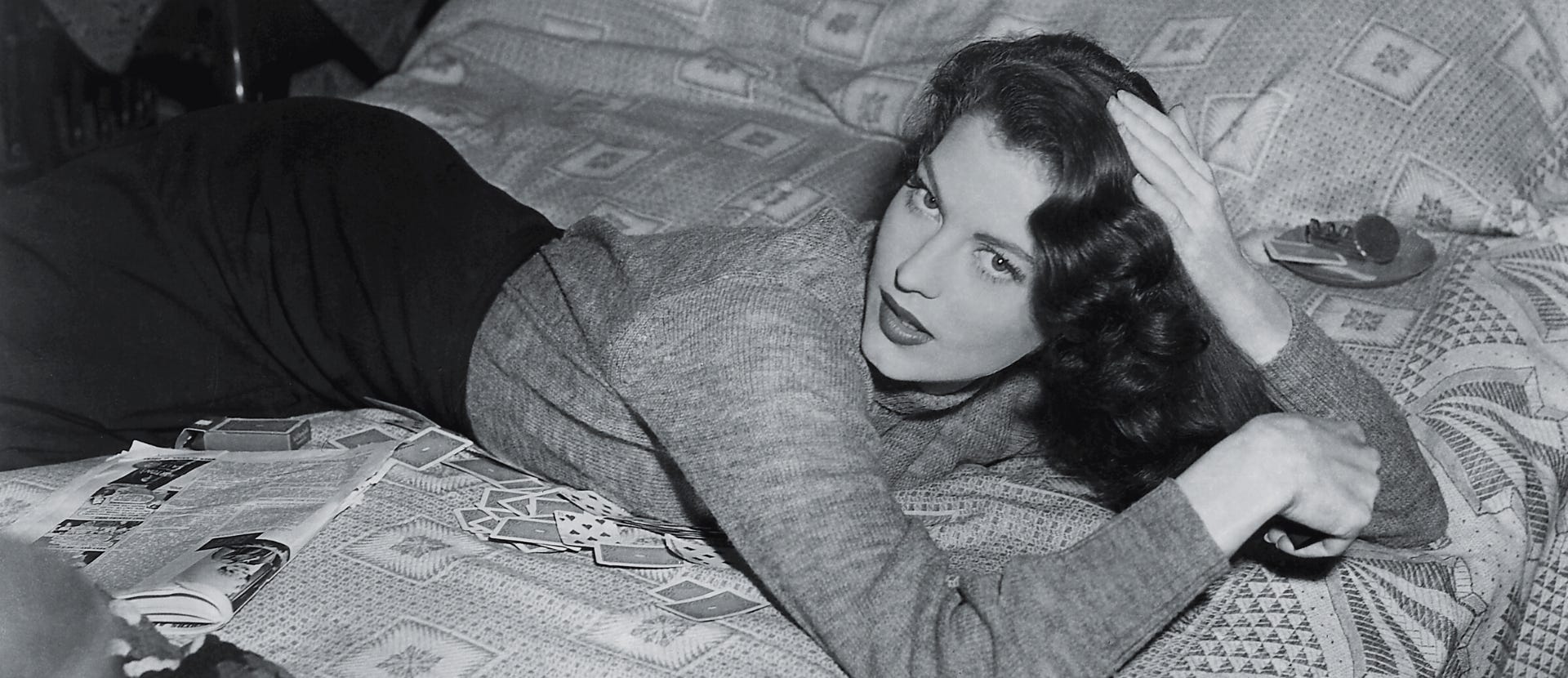
A thought: what if the contraceptive pill had been available then? Might easing biology’s constraints have allowed a more stable equilibrium between the sexes, a mutual respect grounded in choice, rather than shaming and repression?
The point is this: the 1950s were a detour shaped by trauma, not the culmination of tradition.
If we are going to talk honestly about tradition, we need to look further back, to family life organised around different forms of power and different rhythms of time.
For most of human history, survival revolved around households embedded in kin networks and local communities. The hearth was not a sentimental symbol but a centre of production, exchange and continuity.
This does not mean those societies were egalitarian. Formal authority in land ownership, inheritance and politics was largely male-dominated. Patriarchal systems were real. But they weren’t all-encompassing.
Alongside more visible hierarchies, women exercised substantial authority within the domains that sustained daily life: food management, textile production, household economies, kinship ties, reciprocity. These were not trivial spheres of influence. They were foundational. That authority did not always translate into legal ownership or public voice, but it was nonetheless real. Power was layered, negotiated and interdependent across communities.
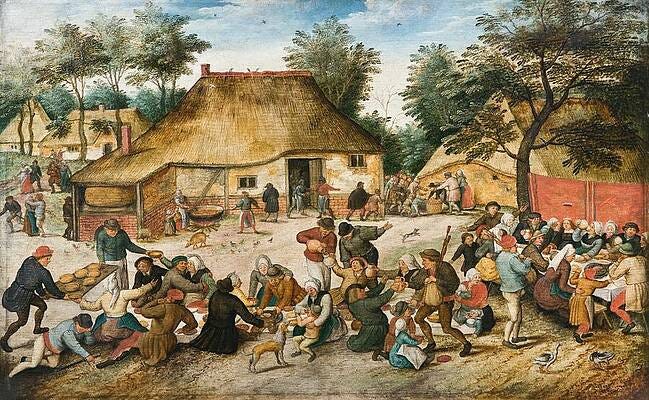
Before steam engines reorganised life around wages, households functioned through a mesh of economies; gardens, commons, barter, shared labour, craft — only partly cash. Industrial modernity collapsed that complexity into visible income. Power became measurable, and therefore narrower.
The idea that power resides chiefly in wages and salaries may be a standard assumption today. But it is not a timeless truth.
When families today try to square modern economic demands with human needs, the mismatch becomes obvious. Parenting and domestic labour remain the load-bearing walls of society, unpaid, uncounted, structurally invisible.[⁴]
It’s well accepted that mothers carry enormous burdens. But many fathers are increasingly engaged as well, showing up domestically and making up what shortfalls they can, so far as time and biology allows. And yet, even with both parents fully committed, the modern family system runs at a deficit. The shortfall is structural.
I don’t write this as a spectator. My wife and I have four children. We work hard. We juggle. We calculate. We compromise. We appreciate each other’s stresses and strains. And yet the background pressure of modern life presses in on us daily. For us, this isn’t abstract culture theory. It’s a question of how tenderness can survive exhaustion, how children’s birthdays can be celebrated while worrying about mortgage foreclosure, the kind of love we’re modelling for our children, the time we can give them, whether belonging can hold up under strain. Looking around, we also realise that, as a family, we’re still luckier than many.
This isn’t sustainable over generations. The shortfall explains a lot of trad nostalgia, rising anxieties and falling birth rates [⁵] If society wants families to thrive, it cannot keep treating the hearth as incidental. Domestic and parental labour must be recognised as foundational, rather than presumed as sentimental charity. Because the oldest engine of human survival is beginning to stall.
At an individual level, it’s not about ideology. Rather, it means treating time, care and presence as real resources rather than sentimental extras. Asking not only “who earns more?” but “what sustains intimacy and belonging?” Choosing trade-offs consciously instead of absorbing exhaustion as normal.
At a communal level, we need to remember that the nuclear family was never designed to operate alone. Family life was once buffered by webs of support, shared childcare, shared meals, neighbours who noticed strain, youth clubs. Rebuilding that requires consciousness and communal intention.
At a societal level, the reckoning is unavoidable. If everything is measured in money, then the labour that makes life possible must count too. A civilisation that refuses to value care narrows its own future. Contrasted against the depraved behaviour of global elites, then as Liz Plank said in her recent Substack essay, “The system can no longer convincingly explain itself.”
The real question is about what we choose to value, and where care features on that list. If money is how we measure value, then money must pay for care. Because a civilisation that refuses to value care can’t reproduce itself. Without revaluing the work that keeps us alive, the maths of modern life will never balance.
I feel that the real conversation we should be having isn’t about whether women should stay home or men should earn more. We should be honest enough to admit that the world we’ve built makes family life increasingly untenable and start there.
If younger generations delay commitment or quietly opt out altogether, who can blame them? It’s only because we’re handing them a system that doesn’t add up.
I want to give my children a future worth inheriting, where care and presence aren’t punished and parents don’t have to be martyrs. Don’t you?
Sources
[¹] UK wage stagnation and cost-of-living pressures
• UK Office for National Statistics – Earnings and working hours
https://www.ons.gov.uk/employmentandlabourmarket/peopleinwork/earningsandworkinghours
• OECD – Inequality and household income trends
https://www.oecd.org/els/soc/inequality-and-poverty.htm
[²] WWII casualty scale and mass exposure
• Encyclopaedia Britannica – World War II casualties
https://www.britannica.com/event/World-War-II/Killed-wounded-and-missing
• Imperial War Museums – Scale of civilian and military involvement
https://www.iwm.org.uk/history/how-many-people-died-during-the-second-world-war
[³] Post-war trauma recognition and psychiatric history
• NHS – PTSD overview
https://www.nhs.uk/mental-health/conditions/post-traumatic-stress-disorder-ptsd/overview/
• Smithsonian Magazine – America’s first tranquilizer / post-war mental health
https://www.smithsonianmag.com/history/americas-first-tranquilizer-180967799/
[⁴] Valuation of unpaid domestic labour
• Oxfam – Value of unpaid care work
https://www.oxfam.org/en/what-we-do/issues/womens-economic-empowerment/unpaid-care-work
• UN Women – Redistribute unpaid care and domestic work
https://www.unwomen.org/en/news/in-focus/csw61/redistribute-unpaid-work
[⁵] Fertility decline trends
• UK Office for National Statistics – Fertility rates
https://www.ons.gov.uk/peoplepopulationandcommunity/birthsdeathsandmarriages/fertilityrates
• OECD – Fertility indicators
https://www.oecd.org/els/family/database.ht
Excellent, important, and balanced. I couldn’t agree more, Piers.